
Life in the Centre of God's Love!
Mike Evans: God Moving in Middle East as Egyptian President Builds Huge Church for Christians
5:40PM EST 1/15/2019 STEPHEN STRANG
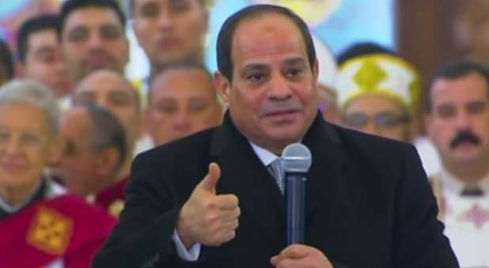
Egyptian President Abdel Fattah el-Sisi built the largest Christian church in the country. (YouTube/FRANCE 24 English)
God is doing incredible things in the Middle East. Christians rejoiced on Jan. 7 when Egyptian President Abdel Fattah el-Sisi built the largest Christian church in the country. The Muslim president funded this huge project as a way of showing his appreciation and support for the nation's Coptic Christians. U.S. President Donald Trump expressed his enthusiasm for Egypt's act of kindness with a tweet: "Excited to see our friends in Egypt opening the biggest Cathedral in the Middle East. President El-Sisi is moving his country to a more inclusive future!"
My friend Mike Evans, founder of the Friends of Zion Heritage Center and the Jerusalem Prayer Team, recently met with el-Sisi three times and says the president has a generous heart toward Christian believers.
"Every single time I meet with [el-Sisi], I pray with him," Mike says. "He has a strong faith. ... But he, above any Muslim leader in the entire Middle East, has gone in support of the Christian church. Yes, he built the biggest Christian church in the Muslim world ... and it's symbolic of what they're doing for Christians."
This is huge news for a country where Coptic Christians have endured persecution for centuries. It's not uncommon to see reports of Islamic extremists murdering, kidnapping or attacking Copts. But it seems that God is turning things around for the good of those who love Him, just as He promises in Romans 8:28. Mike told me in a "Strang Report" podcast interview recently that el-Sisi is working hard to protect Christians from ISIS. And thankfully, it's not just the president who's doing this.
"Shockingly, Muslims right now in Egypt are laying down their lives to protect Christians," Mike says.
Mike is right—that is shocking! In fact, I would say that's almost unheard of. Equally surprising, Mike says, el-Sisi has not received much pushback from other Muslims in Egypt. On the contrary, Mike says, something is stirring in the Muslim world. For instance, he tells me he flew to Abu Dhabi, capital of the United Arab Emirates, and met with the crown prince, Sheikh Mohammed bin Zayed Al Nahyan.
When Mike asked the crown prince what he thought about Christians, Mohammed bin Zayed told him a Christian missionary helped his mother, who was having trouble giving birth to twins when there was no health care. Sadly, one child died, but the missionary managed to save the other child's life. In response, the crown prince's parents honored the missionary by giving her their six-bedroom house so she could build a Christian hospital. Since then, the crown prince's Muslim parents have donated $100 million to this Christian missionary nurse.
"Who would've thought that we would see a day when Muslims are building a hospital for Christian missionaries?" Mike says. "And I briefed the White House that I know of six Muslim countries that actually want to make peace with Israel. They want to do more than that. I told [Israeli Prime Minister] Benjamin Netanyahu, 'Your legacy very well may be making peace with five to six Muslim countries.'"
I can't help but wonder how much of this is a result of years upon years of Christians praying for revival and for the Jews. Mike says the Jerusalem Prayer Team—which grew out of a restoration of Corrie ten Boom's regular prayer meetings—has grown to 54 million members. To add perspective to their size, Mike says their Facebook page is the largest religious Facebook site on the planet.
"We're living in a brand-new day," he says. "This is a brand-new day. It's revival."
To sign up for this prayer team,
visit their Facebook page and click "Like" and "Follow." As this prayer movement grows surely we can expect to see more miracles in the Middle East and around the world. Link below.
Multiple Signs, Wonders Confirm Great Move of God in Ohio – Rev. El Akuchie
The Bible is coming to life beyond belief in the heartland of the Buckeye state. Clergymen from Richland County, Ohio, are reclaiming the nexus between church and state and proving they are the juggernaut that can bring social change to their region.
Like night and day, this former "belt buckle of the Rust Belt" is now on the brink of becoming a new loop of the Bible Belt.
This report supplies ample evidence of pastors working in tandem, making an eternal difference in culture. This account also documents tangible blessings that followed hand in hand after biblical obedience. One of the most profound instances of this divine momentum includes a timely signature clergy collaboration calling for resistance to a federal government which hit below the belt.
Local Clergy 'Johnny on the Spot'
Bountiful August rains in the midst of a five-month drought in 2016 came at just the right time. This rainfall had a ripple effect, bringing an unusual abundance of milk and honey, and propelling a robust harvest. Despite being the second hottest August on record, milk productivity countywide increased 43 percent from the previous August. Meanwhile, swarms abounded for a bee population still stinging from the colony collapse disorder, with one prominent beekeeper declaring the summer of 2016 as "the best bee season in a decade."
"Showers of blessing" became new buzzwords to come out of a sticky situation. In spite of the drought, one farmer exclaimed "In 74 years of farming, I have never had 80 bushels of soybeans an acre like I did in 2016!" Another farmer proudly boasted of having five cuts of hay that year. ... but that's not all.
This extraordinary turn of events occurred one month after clergy drew national attention for challenging the Washington, D.C., establishment. Leading clergymen from over 100 congregations across Richland County sent a letter to local and state school officials calling for civil disobedience to the Obama restroom mandate.
Citing the mandate jeopardized privacy and safety of women and children, these ministers took a bold stand when many were afraid to challenge a hostile federal government. Interestingly, 50 years prior, the county seat of Mansfield drew headlines addressing the same issue of public restroom safety when the city permanently closed down and buried underground public restrooms on the city square to stop lewd behavior.
This same month also saw a sudden exodus of witchcraft with two out of the three area psychic stores closing. Legislative efforts to attack religious freedoms were also averted. And despite an infant mortality rate nearly twice the national average, no cases of premature infant deaths were recorded. Last but not least, the clergy's milestone moment saw no traffic fatalities during the same summer vacation month.
According to the ancient promises described in Deuteronomy 28, simple obedience by pastors became a pivot point to set these wheels of blessing in motion; one act of faith can change a nation.
Repealing the Clergy Gag Order
When addressing public issues of morality, clergy have the right of way. Second Chronicles 26 shows Azariah the high priest and 80 other courageous priests confronting the prideful King Uzziah when he challenged biblical authority. In this case, taking the moral high ground did not involve neutrality, it involved championing truth by confronting authority.
Christ regularly confronted politicians. Lively debates are recorded between Christ and the Sanhedrin over issues like paying taxes, food requirements, health care on the Sabbath and commerce inside the temple. Consequently, when Moses confronted Pharaoh over slavery, their confrontation impacted the agriculture, public health, transportation and weather patterns of a national superpower. These encounters became defining moments. It goes to show, you don't have to change everything for everything to change.
Walking in Faith Leads to Charters of Faith
Throughout recent times, Richland County clergy have taken well-timed biblical stands that have helped define the faith community while simultaneously providing a mechanism to hold community leaders accountable.
After the U.S. Supreme Court redefined marriage in 2015, leading clergymen from 66 congregations publicly called Richland County to a day of prayer and fasting. The clergy statement defined immorality scripturally, took ownership over the community's sins and also cited two redemptive case studies of community turnarounds that ensued after each society repented.
That following year, eight of the nine mayors throughout the county gave pornography awareness proclamations. Also, police shut down a human trafficking brothel in response to a crime tip given by 14 area pastors. Just one month after clergy sparked this investigation, another brothel by the same name was closed in Lancaster, Ohio.
Alluding to this crime tip by the clergy, the Mansfield Police Chief in 2018 stated: "We have had unprecedented church involvement for several years. They have been very supportive and have helped uplift the community and helped get involved in solving crime ... they have done great things."
This is a powerful statement, reinforced by the fact that Mansfield has had three consecutive years of declining crime. Consequently, in 2017, several law enforcement agencies have placarded "In God We Trust" on all their squad vehicles, a stark contrast to one generation earlier when area law enforcement were enlisting the services of a California psychic to solve crime.
But psychics didn't see this coming when farmers had the best winter wheat crop recorded in 47 years after 36 pastors in January 2016 sent a written warning to a local business against hosting a psychic reading. The clergy made it crystal clear that psychic reading can involve consumer fraud of unsuspecting persons and could hold the business liable to litigation. The warning was given the same time the area began experiencing a five-month long housing upswing where the average number of days a property is on the market dramatically dropped and average sales prices went thru the roof.
In response, local veteran realtors stated that the turnaround was "unheard of," and that they had never seen a real estate market like it before. Suddenly, properties in Richland County became sought after and no longer forsaken, not bad for a county that led the state in foreclosures the previous two years. As a result of the upswing, the clerk of courts one year later commented that "foreclosures are down significantly. It's a huge drop, and I'm not completely sure why."
While New Age benefited from abandoned buildings as haunts, clergy are taking ownership of their community, and the future is becoming more certain: no man's land is becoming promised land.
Speaking of sorcery, police found marijuana growing on a church roof 30 years ago; but in 2017, clergy led a grassroots effort against local legalization efforts, with 70 pastors sending a policy letter to local government calling for prohibition of medical marijuana. The City of Mansfield and several villages and townships followed the clergy's lead prohibiting the dispensing and cultivation of the drug, due to its adverse health effects, affiliation with crime and inevitable illegal diversion. In fact, the director of economic development pointed to the clergy letter as the "death note" that killed a nearby Ontario City marijuana facility proposal.
Pastors became the talk of the town in 2016 when policymakers were actively considering a local syringe exchange program. Subsequently, a letter written five years prior by 72 area clergy opposing donations to a syringe exchange injected fear and closed the matter from going any further.
This same year the clergy opposed needle exchanges, seven pastors armed with drug treatment ministries confronted the County Fair Board, calling for the cancellation of a fair beer garden. The clergy caused a stir in the community, demonstrating that the beer garden did not meet its revenue goals and brought a bottleneck to security. The very same night the pastors presented their concerns to the board, a mysterious fireball was spotted and made landfall inside county limits. Five government agencies responded to the explosive scene, but the incident remains an enigma. For the pastors, these trailblazers that night became the stewards of the mysteries of God. No coincidence.
No Such Word as 'Coincidence' in Hebrew
In January 2017, clergy from over 100 congregations in north central Ohio sent an apology letter to Israeli Prime Minister Benjamin Netanyahu for the position the Obama administration took in not blocking United Nations Resolution 2334. This anti-Semitic resolution called Israel's sovereignty of the promised land "an international crime."
Ten days after the apology letter was sent by the Ohio clergymen, a massive natural-gas pipeline was approved for construction thru north central Ohio after the project was held up by the Federal Energy Regulatory Commission. The Rover Pipeline Project is more than twice the size of the controversial Keystone Pipeline. With its approval, the 713-mile pipeline brought an economic rebound, with hundreds of thousands of dollars to the stagnated local economy at a time when energy projects often go contested.
According to Department of Agriculture numbers, the spring turkey harvest in Richland County saw a dramatic increase from the prior year, whitetail deer harvested was the best in four years and the cow herd in Richland County, which is estimated in late winter, was measured at its largest size in over 30 years, which is utterly amazing.
The astounding blessings the area experienced from the apology letter aftermath provoked 42 area clergymen to also request the county treasurer to invest taxpayer dollars in Israeli bonds.
The day the county treasurer announced the county government would invest nearly $200,000 in Israeli bonds, was the same meeting that half a million dollars in unexpected revenue was announced to alleviate a budget shortfall. This clergy apology letter had a snowball effect and sends shivers down your spine to think that the blessing of Abraham still impacts our generation.
Almost half a year after these astounding blessings made international news, the deputy speaker of the Israeli Knesset visited north central Ohio in the autumn of 2018 to thank the area for its support of the Zion state. The visit provoked one Israeli journalist to write an article entitled: "Does Rural Ohio Lead the World in Love of Israel?"
For what it's worth, according to media reports, a loud unexplained boom was heard over Richland County the same day the local newspaper first published the story on the Israeli-clergy apology letter. Power Company officials and emergency responders were scratching their heads trying to determine the source of this strange phenomenon. In retrospect, some say it was the voice of the Lord thundering His approval when the news first broke. I call it God restoring thunder back to the pulpit.
Reverend El Akuchie is coordinator of the Richland Community Prayer Network, founded in 1998 and based in Mansfield, Ohio.
Canadian Christians Branded As "UnCanadian" For Traditional Religious Beliefs
Attacks on freedom of religion and freedom of conscience are a near-constant in Canadian news cycles of late, from physicians fighting in court for the right not to refer for procedures they find immoral to religious schools battling the government in court to maintain the independence and integrity of their institutions.
Many religious views have been recast by many progressive politicians and academics (with the obedient acquiescence of the media) as hateful and even vicious, and as such it is open season on those who dare to hold these views and worse, speak of them aloud.
So I am not surprised that a recent study by the Angus Reid Institute in partnership with Cardus, a conservative think tank based out of Ottawa, indicated that only 59% of Canadians say that religious freedom makes our country a better place, leaving a full 41% that presumably feel that religious freedom makes our country a worse place, or at least feel ambivalent about a fundamental freedom. Ray Pennings of Cardus broke it down recently in the Hamilton Spectator:
While a clear majority sees the benefits of religious freedom, it’s curious that more of us aren’t enthusiastic about this fundamental human right. What’s at play here?
There are likely several factors, including a hardcore secularist viewpoint, though this remains a minority view in Canada.
The same survey used a series of measures to classify Canadians among three categories — those welcoming of faith in public life, those who are unsure and those hostile to it. The proponents of public faith are the largest group at 37 per cent, while the other two weigh in at 32 per cent each. Only 31 per cent of the group hostile to public faith say religious freedom makes Canada better. An almost equal proportion says it makes Canada worse. Clearly, hardcore secularism contains a fervent opposition to religion and its free expression.
Related to that secularism could be prejudice against public displays of faith. Indeed, half of Canadians say they’re uncomfortable with religious garments or symbols in the workplace — something that disproportionately affects Muslims, Jews and Sikhs. Such discomfort may translate into lower support for religious freedom.
Still, that’s not the whole story. Could it also be that some Canadians feel that the Charter of Rights and Freedoms’ guarantee of religious freedom doesn’t adequately protect them? If so, their answer about religious freedom may reflect their judgment on the effectiveness of Charter protections.
Seven in 10 Canadians say they feel the federal government respects their religious community. And almost six in 10 say Canadian society either makes room for their faith and values or has little impact on them…Now the bad news: Christians don’t fare as well. Overall, Catholics and other Christians feel less respected by government and less welcome in society than non-Christians do.
But it’s Canada’s evangelical Protestants who feel especially marginalized. They’re the most likely to say the feds disrespect them, with four in 10 evangelicals saying so. And just over half of this religious minority says society shuts them out. They may not be enjoying all the benefits of religious freedom.
This finding is unsurprising given the news of the last year: Evangelicals and other Christians bore the brunt of the federal government’s Canada Summer Jobs fiasco, which filtered out grant recipients based on their beliefs. Legal challenges are ongoing but haven’t borne fruit yet.
The evangelical Trinity Western University in B.C. faced discrimination by several law societies opposed to it setting up a law school — discrimination that the Supreme Court of Canada eventually upheld.
And in Alberta, it’s mostly evangelical schools that are threatened with the loss of funding over an ideological disagreement with the provincial government.
But could there also be some amnesia about the fundamental human right of religious freedom?
What many may not realize is that religious freedom is not just for the religious; it benefits everyone. It protects the ability of the religious and non-religious to act according to their deepest beliefs — informing our freedoms of speech, association and assembly. More Canadians need to see and understand this connection.
The fact that they don’t, of course, can be tied to a number of things. Traditional Christian views are now considered to be widely “offensive,” a word now frequently used to justify censorship. People are simply less tolerant of being exposed to ideas they dislike, and less willing to engage in discussion.
Our current prime minister’s rhetoric doesn’t help: Justin Trudeau has consistently condemned traditional Christian beliefs as “unCanadian,” helping to cement the idea that Canadian Christians are somehow less Canadian because they are Christian.
It is fascinating to me how such an a historical view can be so consistently propagated. Canada was founded on Judeo-Christian principles, and this fact was once widely known and understood.
You cannot drive anywhere in this country without encountering evidence of Canada’s Christian heritage. The aging churches, the moss-covered Celtic crosses in the graveyards, the religious nature of the cenotaphs and memorials to the fallen.
By the new standards of Justin Trudeau and his ideological fellow-travelers, the men and women who built this country are somehow less Canadian than they are because they believed different things about the fundamental nature of life and family. This view cannot be defended, and therefore it is easier for Trudeau and those like him to instead respond to disagreement with sneering and condescension.
In the broad sweep of Canadian history, I would prefer to stand with those indomitable and hard-working men and women of faith who held to the traditions of their ancestors and thousands of years of revealed truth rather than a man who chases the progressive absurdities of the current moment and sneers at the noble generations who believed things he cannot understand.
Originally published at The Bridgehead - reposted with permission.
In Today's Culture, You Are What You 'Identify As' – J. Lee Grady
Last month, a Dutch man, Emile Ratelband, asked a court in the Netherlands to permit him to change his legal age from 69 to 49. He said he "feels 49," and he said his doctor agrees that he looks young for his age. Ratelband complained that he has suffered from age discrimination—especially when looking for dates with women online.
Comparing himself to transgender people who change their sexual identity, Ratelbrand claimed in his lawsuit that age is not a fixed reality. "Time is just a figure," he said. "I say it is not fixed."
Unfortunately for Ratelbrand's dating life, the Dutch court ruled against him this week. While recognizing that "some people today feel fit and healthy in their old age," the judges did not regard this as a valid argument for amending a person's age. They affirmed that Ratelband's birthdate is still fixed at March 11, 1949.
We can be thankful that these Dutch judges ruled on the side of sanity. But in today's bizarre world of "self-identification," Mr. Ratelband's attempt to alter reality will likely become more common. Consider these recent examples:
-
We all remember Rachel Dolezal, a white woman who pretended to be black while leading the local NAACP chapter in Washington state. When her deception was exposed in 2015, she told reporters that she "identifies as black"—as if her personal feelings about her race can automatically overrule genetics. Dolezal later explained that she believes race is "a social construct" that has no basis in science. She said: "I really just prefer to be exactly who I am, and black is the closest race and cultural category that represents the essence of who I am."
-
In November, controversial Irish singer Sinead O'Connor went on a racist rant on Twitter, announcing that "white people are disgusting." The former pop star said, "I never want to spend time with white people again," even though she herself is white. Known for her shaved head, O'Connor said she has changed her name to Shuhada' Davitt and has started wearing a head covering because she is now a Muslim.
-
You may never have heard of "therians," but it probably won't be long before you meet one. Therians don't believe they are humans, and they celebrate their animal identity on their Instagram pages and YouTube channels. One Norwegian woman named Nano said she realized at age 16 that she has been a cat all her life. She walks on all fours and claims she can see in the dark and hear things humans can't.
-
Dennis Avner, a famous therian who committed suicide in 2012, was so convinced he was a cat that he had his ears reshaped, got whiskers implanted and had cat stripes tattooed all over his body. (Today there are also "polytherians" who identify as more than one animal.)
-
Things are becoming even more confusing when it comes to gender. Ever since athlete Bruce Jenner announced in 2015 that he was transitioning from male to female, the trans movement has exploded. There are now officially 63 different designations for gender on record. One of those, "gender fluid," refers to a person who believes they are a mix of both genders and that their gender designation is not fixed.